
Find precise details
Separate an updated date or location from an earlier notice. Notice quantities and who is responsible for each task.
Free reading practice for adults
Read with a purpose. Answer 5 or 10 questions, check the details you understood, and return to the text when something needs a closer look.
Practise understanding details, sequences, conditions, and main ideas at your own pace. Review your accuracy alongside reading time, rather than chasing speed alone.
Reading comprehension means making sense of what is written. These exercises ask you to work with the passage's information rather than rely on what sounds plausible.
Separate an updated date or location from an earlier notice. Notice quantities and who is responsible for each task.
Reconstruct what happens first, what changes when an event begins, and what is planned afterward.
Distinguish a requirement from an optional activity. Apply limits such as more than ten without confusing them with ten or more.
Choose what follows from the information given, without filling gaps with assumptions about what usually happens.
Separate the central aim of a passage from a secondary activity or one interesting detail.
Ask what a count or observation can establish. A queue count, for example, does not tell you each visitor's waiting time.
Read at your own pace, answer 5 or 10 questions, and check your understanding against the passage. There is no time limit.
Settings shows the passage title and word count. Choose your question count before starting; five is the default. Small, medium, and large text sizes can be changed during practice. Choose a passage from the list before starting. Your progress shows completed sessions, the latest score, and the best valid WPM for the selected passage, language, version, and question count.
Press Start and read at a comfortable pace. The text scrolls inside the tool. Check comprehension becomes available near the end, or immediately when the passage fits without scrolling.
Choose 5 or 10 questions in Settings before starting. Choose one answer for each question. You can go back and revise your choices before submitting. Read the text again is available if you need to check a detail.
After submission, expand a question to see your answer and any correction. Show supporting text takes you to a relevant paragraph; Back to results returns to your review.
Compare accuracy, initial reading time, and answering time. Open History to see completed attempts saved on this device, or finish the session when you are done.
Play/pause
Take a break without losing your answers or scroll position.
Guide and other dialogs
Timers pause while a dialog is open. Closing it resumes timing only if the exercise was running. Settings leaves practice paused until you press Resume. Hidden tabs are also excluded.
Reset
Discard the current attempt after confirmation when needed. Completed history is kept.
Reading and answering time
Reading time covers the initial read. Answering time includes returning to the passage.
Estimated WPM
Word count divided by active reading minutes. Skipping text can inflate it; prioritize understanding over speed.
Valid session
All answers correct (5/5 or 10/10). Best WPM needs usable timing for the same passage, language, version, and question count. Repeated attempts and text consultation remain eligible.
These are practice rules, not a standardized assessment of reading ability.
Local history
Without an account, each completed attempt is saved in this browser. History includes valid and invalid results. When signed in, supported result summaries are saved to your Quartenson account; selected answers and passage text are never included. Clear local history removes guest records stored here.
Try again
Restart the reading flow.
Finish session
Return to the ready screen.
Neither Try again nor Finish session deletes completed history.
Use this tool if you want to check whether you noticed an exception, followed a sequence, or understood why a plan changed. The focus is careful reading of practical information, not memorizing a passage after it disappears.
Students and confident English learners can also use the questions to inspect their understanding. The material is not assigned a school grade or assessed language level, and it is not designed to reproduce an exam format.
For a focused session, choose one habit to work on: check conditions before choosing an answer, put events in order, or find the sentence that supports your conclusion. Use the answer review to see where your interpretation differed from the text.
Look at accuracy first. Reading pace is useful context, but it cannot establish that you understood the whole text.
Your score is the number of correct answers out of your selected question count. It describes those selected questions, not a reading age, proficiency level, or standardized assessment result.
Reading time runs from Start until you begin the questions. Answering time includes checking the passage again. Pauses, hidden tabs, and open dialogs are excluded.
WPM is the passage word count divided by initial active reading time in minutes. It is an estimate: the browser cannot tell whether you read every word or skipped ahead.
A valid session means all answers were correct. Any other completed score is labeled invalid for personal-best eligibility, but is still useful practice and stays in history. Best WPM uses only valid sessions with usable timing for the same passage, language, content version, and question count.
Repeated attempts and looking back at the passage remain eligible. This means familiarity or quick reference-checking can contribute to a fast result. A new best is a record under these rules, not proof of faster comprehension of unfamiliar texts.
Read the full passage before starting the questions. When an answer is wrong, return to the supporting paragraph and identify the exact difference: an old date, a missing condition, a reversed order, or a conclusion the text does not support.
Before repeating, explain the correction in your own words. A familiar passage is useful for reviewing mistakes, but a fresh passage asks you to apply the same care to different information. Do not treat shuffled questions as a new reading text.
For a practical discussion of choosing a reading approach, see skimming, scanning, and careful reading. If order is the difficult part, explore remembering a process or sequence of steps.
Completed sessions are saved when you submit all answers. History includes aggregate scores, question count, active durations, word count, passage/version identifiers, language, completion date, and a text-consultation flag. It does not save your selected answers or the passage text.
Without an account, history stays in this browser. When signed in, supported result summaries are saved to your Quartenson account; only aggregate metrics and passage/version identifiers are included, never passage text or selected answers. Clear local history removes guest records from this browser. Unfinished attempts do not become invalid history entries.
If you consent to analytics, we record basic tool actions such as starting, completing, or opening settings. These events do not include your answers, scores, reading speed, reading times, or saved history.
Practice material is AI-assisted and fictional. The tool checks selected answers against a fixed key; it does not use live AI to grade your responses. Feedback you choose to send uses the separate website feedback form.
Answers about practice, results, and local history.
It is designed for adults and independent learners who want to practise understanding written information carefully. Confident English learners can also use it, but the passages do not currently carry assessed CEFR levels or school-grade labels.
The browser exercise is free and does not require an account. Completed-session history is stored on your device, not in an online profile.
Yes. Use Read the text again, then Back to question. The session receives a Text consulted label in local history. Looking back is allowed and does not disqualify a perfect-score result from best WPM.
Valid means all answers were correct; any lower score is labeled invalid. These labels are rules for this tool's personal-best tracking, not judgments about your reading ability. Both kinds of completed session remain in history.
Best WPM is the highest estimated speed from a valid session with usable, positive reading time for the same passage, language, content version, and question count. Repeated attempts and text consultation remain eligible. Missing or invalid timing cannot produce a best.
Not necessarily. WPM records pace, while your answers check selected aspects of understanding. Skipping text can inflate the speed estimate. Consider accuracy and whether you actually read the whole passage before interpreting a fast result.
Each session selects your chosen 5 or 10 questions from the passage's question bank and shuffles the answer options. During the current visit, previously unsubmitted questions are preferred. Repeating questions or changing their order does not make the passage unfamiliar again.
No. You can read and answer at your own pace. The timers pause when you pause the tool, switch to a hidden tab, or open a dialog. Time does not change the number of answers marked correct.
History keeps the completion date, passage and version identifiers, language, score, question count, word count, active reading and answering times, and whether you consulted the text. Passage text and selected answers are not saved. Clear local history removes the stored reading sessions from this browser.
No. This is task-specific practice with fictional material and a fixed answer key. It does not provide an IELTS or SAT score, a reading-age assessment, or a diagnosis. A perfect-score result is not a certification of general comprehension.
Explore careful reading and ways to make sense of sequences before your next practice session.
Choose skimming for an overview, scanning for a fact, and careful reading for meaning. Try report, email, and study examples with answer checks.
Learn a sequence with meaningful groups, a story, or numbered pegs. Practise a six-step example, recover after interruptions, and keep checklists authoritative.
Schulte tables and visual search practise number scanning and target finding. They are different tasks, not substitutes for understanding a passage.
Free Schulte Table Trainer
Find the numbers in order
Focus • Scanning • Speed
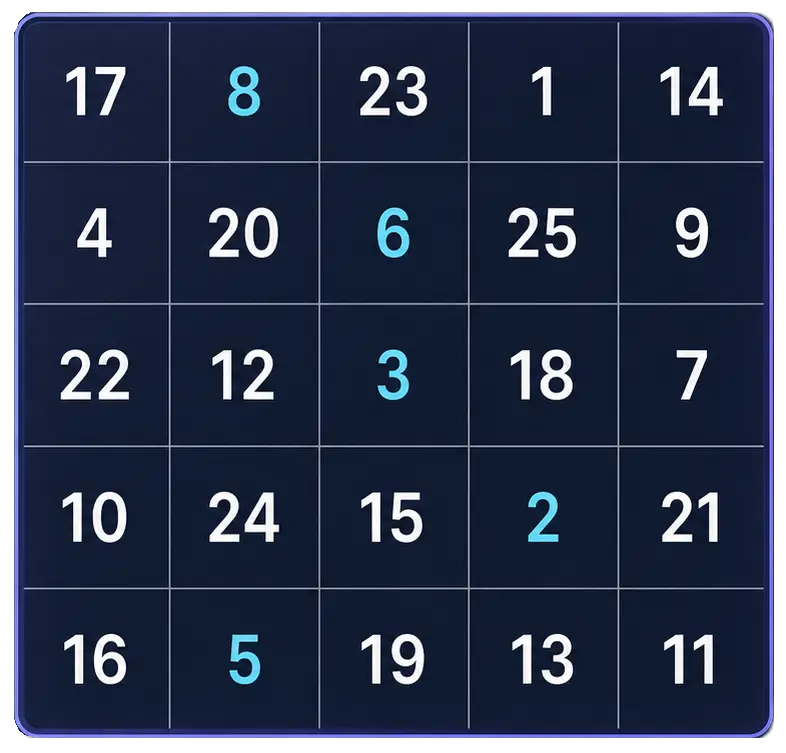
Practice Schulte tables online with a simple browser grid. Choose 3x3 through 7x7, track time and mistakes, and use pause, shuffle, and keyboard controls for quick focus sessions.
Visual Search Test
Find the target among distractors
Speed • Accuracy • Focus
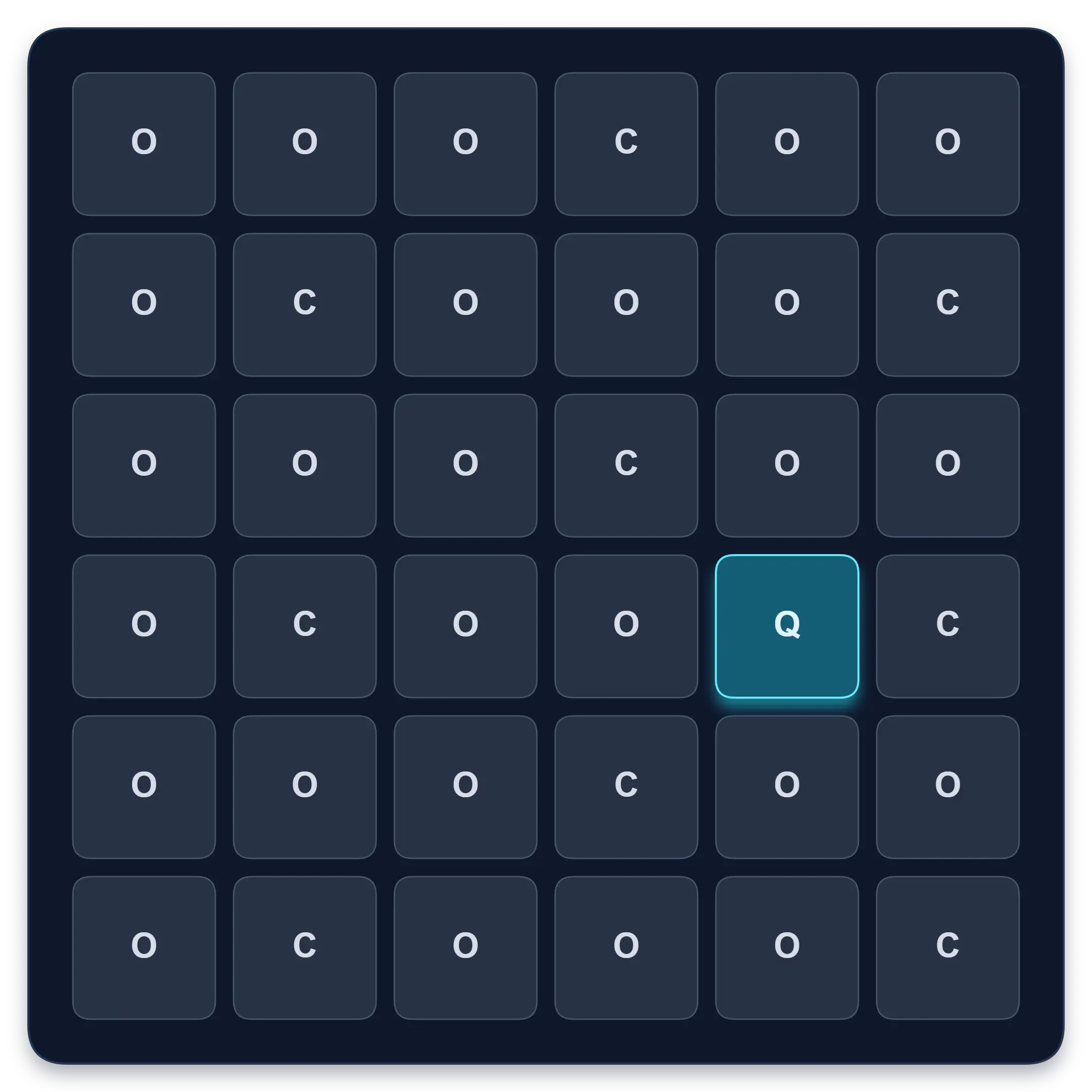
Find one target among similar symbols, letters, or numbers. Complete ten short rounds and track median response time, accuracy, and clean results.