What Is the Stroop Effect? Examples and a Color-Word Challenge
Last updated 4 minutes to read
See RED printed in blue and the instruction matters: should you read the word, name the ink, or decide whether they agree? Here is the difference, and a short way to try our color-word matching game without mistaking its score for a general measure of focus.
What is the Stroop effect?
In the classic color-naming task, conflicting color words slow ink-color naming compared with naming colors alone. The word competes with the required color response. Stroop’s original experiments demonstrated this interference; they did not establish norms for this browser game. Read Stroop’s original paper (1935).
Color naming and matching have different answers
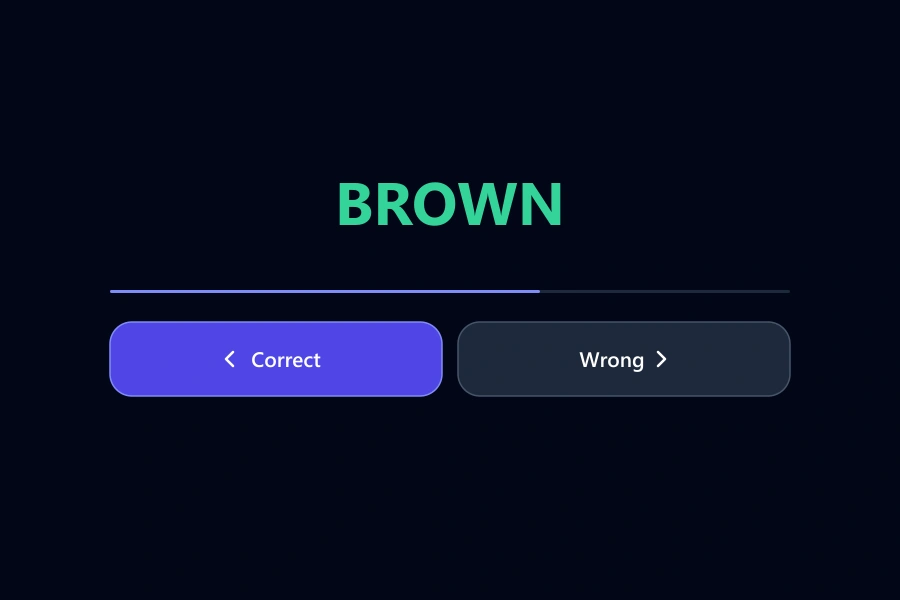
For RED printed in blue, a color-naming task expects “blue.” Quartenson instead asks whether the word names its ink color, so the answer is Wrong. Correct and Wrong describe agreement, not the color you prefer or the word’s spelling.
| Word | Ink color | Our game’s answer |
|---|---|---|
| RED | Red | Correct: they agree |
| RED | Blue | Wrong: they differ |
The circle beside the word repeats the ink color. It does not indicate the correct button. These examples explain our matching rule; they are not a recreation of the original research materials.
Try a short session
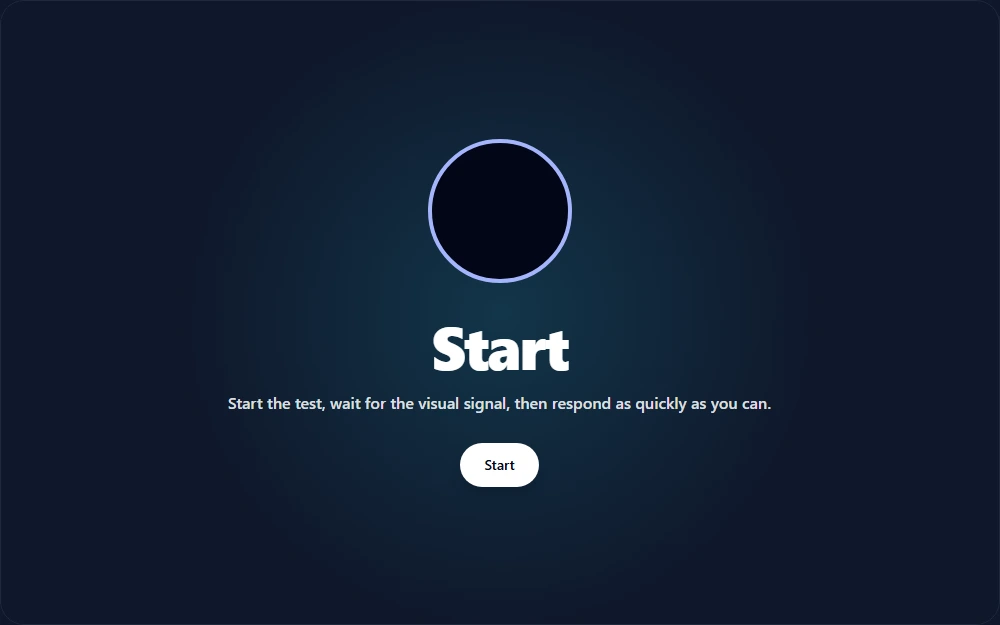
- Start with 20 rounds. Choose a language in which you can comfortably read the color words.
- Check the word and its ink before deciding. Press ← for Correct when they agree, or → for Wrong when they differ. You can also tap the buttons.
- Watch the thin countdown line: each answer window lasts up to five seconds. An unanswered window counts as unanswered. Pause if you need a break.
- Review accuracy before chasing a faster time. Keep the same mode, session length, language, device and input method for another attempt.
What should you look for in the results?
- Correct answers and accuracy: read the number correct alongside all scored trials. Wrong answers and unanswered trials stay in the accuracy denominator; skipping difficult items does not improve it.
- Median response time: this is the middle time among answered trials, including wrong answers. A faster median with more mistakes is not automatically a better result.
- Matching and conflicting trials: the separate correct counts show where errors occurred. They are counts, not a clinical interference score or separate condition-specific response-time measurements.
Is my score good?
There is no universal good score for this matching game. A practical comparison is several attempts with the same setup: first compare accuracy and unanswered trials, then response time at similar accuracy. In timed mode, also check trial count; equal session lengths do not guarantee equal numbers of answers.
A change can reflect familiarity with this particular task or a different setup. The game is practice, not an IQ test or a diagnostic assessment. Its score does not establish how well you will concentrate at work. If its colors are hard to distinguish, choose another exercise.
Quick questions
Short answers that clarify the main value of this article.
Is this the classic Stroop test?
No. The classic example asks you to name the ink color. This game asks whether a color word and its ink agree, using two response buttons.
Can I compare phone and keyboard results?
Keep them separate for useful comparisons. Switching device, display or input method changes the conditions of your attempt.