
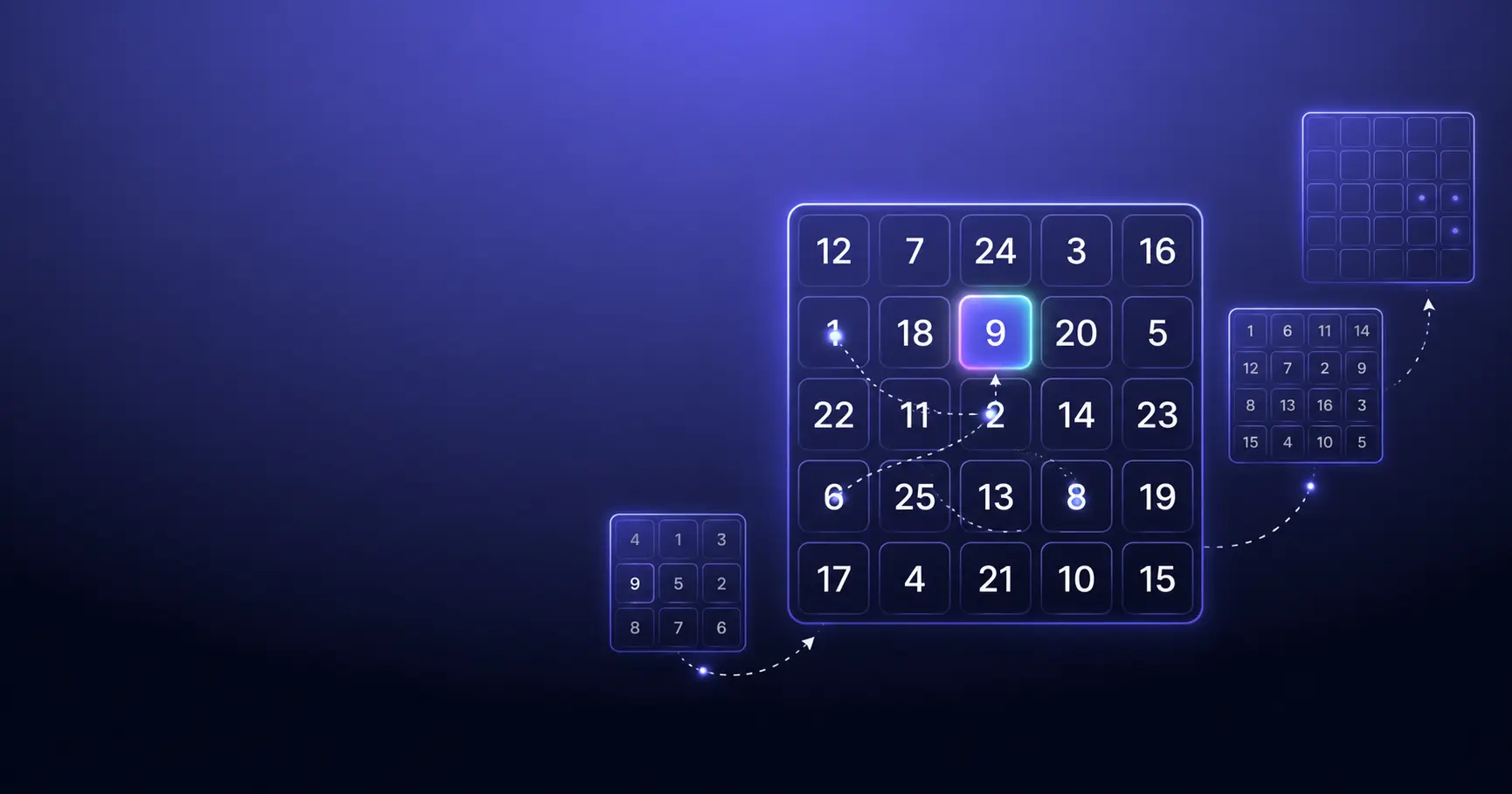
How to Use Schulte Tables Correctly | Beginner 5×5 Routine
Last updated 7 minutes to read
Quick Answer
To use Schulte tables correctly, start with a manageable grid, find numbers in order, prioritize accuracy, keep your gaze relaxed, and track more than your best time. A clean, repeatable result is more useful than one rushed personal record.
Schulte Tables are simple on the surface.
Open a grid, find the numbers in order, and complete the table as quickly as possible.
However, many beginners unknowingly develop habits that make training less effective and more frustrating.
This guide explains the basic principles of Schulte Table training, common mistakes, and how to build a sustainable practice routine.
If you need the foundation first, read what a Schulte table is before using this practice routine.
Try one clean round after reading the setup: Free Schulte Table Trainer
Choose Classic mode for normal practice, or Dynamic mode for a separate shuffle challenge. Read Classic vs Dynamic Schulte Tables for the difference.
What Is the Goal of Schulte Table Training?
Once you understand what a Schulte table is, the goal is straightforward: find the targets in order as quickly and accurately as possible without turning the round into a rushed guessing exercise.
People use Schulte Tables for different reasons, including:
- Focus training
- Attention exercises
- Visual scanning practice
- Reading-related exercises
- Cognitive training routines
The exact goal may differ from person to person, but the practical training process remains largely the same: choose a fair grid, stay controlled, and compare clean results over time.
Start With the Right Difficulty
One of the most common mistakes is choosing a table that is too difficult.
A beginner does not need a large grid immediately. The goal is to challenge yourself without creating unnecessary frustration.
| Stage | Grid | Goal | Session length |
|---|---|---|---|
| First try | 3x3 or 4x4 | Learn the task | 1-2 rounds |
| Beginner | 5x5 | Clean completion | 1-3 rounds |
| Improving | 5x5 or 6x6 | Consistency | 2-4 rounds |
| Challenge | 6x6 or 7x7 | Controlled difficulty | Short rounds only |
Focus on Accuracy First
Many people immediately chase speed.
While speed is easy to measure, accuracy is equally important.
If you frequently select the wrong targets, your completion time becomes less meaningful.
When starting out:
- Prioritize correct selections
- Maintain a steady pace
- Let speed improve naturally
A slightly slower but accurate session is often more useful than a fast session filled with mistakes.
Clean vs Rushed
Round A: 48 seconds, 0 mistakes
Round B: 36 seconds, 5 mistakes
Round B is faster, but Round A is probably the better practice result because it is cleaner and easier to compare.
Avoid Scanning Every Cell One by One
Beginners often approach the table like a checklist.
They look at every square individually until they find the next number.
This works, but it is inefficient.
Instead, try to gradually develop awareness of larger portions of the grid.
You do not need to stare at every cell individually.
Many experienced users attempt to recognize targets while maintaining broader awareness of the table.
This process develops gradually through practice.
Maintain a Comfortable Rhythm
A common pattern looks like this:
- Fast start
- Sudden slowdown
- Rushing
- Mistakes
Instead of chasing the fastest possible beginning, try maintaining a consistent rhythm throughout the entire session.
A steady pace is often more sustainable and easier to improve over time.
Consistent Session
Inconsistent Session
Keep Sessions Short
More is not always better.
Many people assume longer sessions automatically produce better results.
In practice, short and regular training is often easier to maintain.
A simple routine might include:
- 3-5 minutes per day
- 3-10 sessions
- Several times per week
Consistency usually matters more than session length.
Track More Than Just Speed
Completion time is useful, but it is only one metric.
Other indicators can provide additional insight:
- Accuracy
- Consistency
- Training frequency
- Weekly trends
- Long-term progress
| Week | Sessions | Average Time | Accuracy |
|---|---|---|---|
| Week 1 | 10 | 38.2s | 96% |
| Week 2 | 12 | 36.5s | 97% |
| Week 3 | 14 | 35.1s | 98% |
| Week 4 | 15 | 33.9s | 98% |
Looking at trends over time is often more informative than focusing on a single personal record.
For deeper progress review, use Quartenson: Schulte Tables to track session history, mistakes, pace, and long-term consistency.
Common Mistakes
Training Only When Motivated
Small, regular sessions are usually more effective than occasional intense bursts.
Obsessing Over Personal Records
A personal best is exciting, but average performance often tells a more accurate story.
Constantly Switching Difficulty
Progress becomes easier to track when training remains reasonably consistent.
Ignoring Accuracy
Speed without accuracy can create misleading results.
If you want a practical benchmark, compare your clean rounds with the Schulte table average time guide.
Expecting Immediate Results
Like most skills, improvement typically happens gradually.
A Simple Beginner Routine
If you are new to Schulte Tables, try the following:
- Choose a 5x5 table.
- Complete 3-5 sessions.
- Focus on accuracy.
- Maintain a steady pace.
- Record your results.
- Repeat several times per week.
This simple routine is enough for most beginners.
Once your technique feels controlled, use the 14-day Schulte table improvement plan to measure a baseline, choose targeted drills, and compare faster clean results.
What Results Should You Expect?
Most people notice progress gradually.
Rather than dramatic changes overnight, improvements often appear as:
- Greater familiarity with the exercise
- Faster target recognition
- Better consistency
- Improved accuracy
- More stable performance
Small improvements accumulated over weeks are usually more meaningful than a single exceptional session.
Conclusion
Schulte Tables are simple to learn but can remain challenging over time.
The most effective approach is usually straightforward:
- Start with an appropriate difficulty
- Prioritize accuracy
- Maintain consistency
- Track progress
- Focus on long-term trends
Whether your goal is attention training, visual scanning practice, or building a daily cognitive routine, regular practice is likely to be more valuable than chasing quick results.
Frequently Asked Questions
Short answers that clarify the main value of this article.
What grid size should a beginner use?
Most beginners can start small and often settle into 5x5 as a practical early standard.
Should I focus on speed first?
No. Accuracy and a steady rhythm usually matter more than rushing for a fast time.
How long should Schulte practice last?
Short sessions are usually best, often just a few minutes several times per week.
What should I track while practicing?
Track more than speed alone, especially accuracy, consistency, and longer-term trends.
Continue learning
More Quartenson guides connected to this topic.
Classic vs Dynamic Schulte Tables
Classic and Dynamic Schulte tables are different exercises. Learn how shuffle mode changes the task, when to use each mode, and why results should not be compared directly.
What Is a Schulte Table?
Learn how Schulte tables work, why the classic 5×5 grid is used, how beginners should practise, and try a free online trainer with timing and mistakes.
How to Improve Schulte Table Time
Use practical drills to reduce pauses, avoid rushing, compare clean 5×5 results, and improve your Schulte table time with a structured 14-day plan.
Schulte Table Average Time
Compare 1,000+ Quartenson 5×5 results by Classic and Dynamic mode. See median, 25th and 75th percentiles, and compare your own time fairly.
Try a free tool
Practice the same ideas with a browser-based exercise.
Free Schulte Table Trainer
Find the numbers in order
Focus • Scanning • Speed
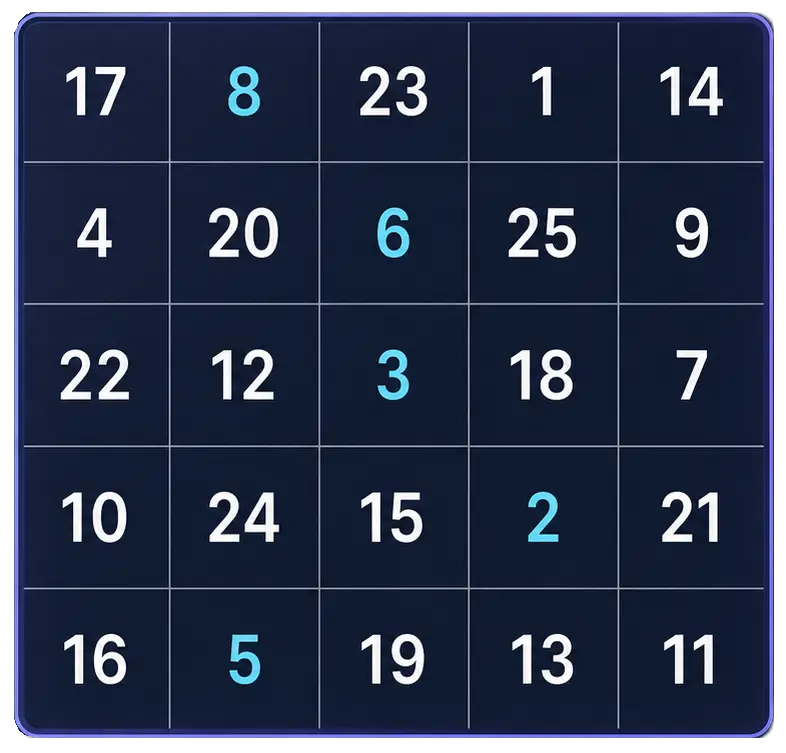
Free Schulte Table Trainer
Browser toolGoal: Cleaner 5x5 rounds with fewer mistakes
Practice Schulte tables online with a simple browser grid. Choose 3x3 through 7x7, track time and mistakes, and use pause, shuffle, and keyboard controls for quick focus sessions.
Start Free TrainerKeyword Method Memory Trainer
Link sound cues to exact meanings
Sound cue • Meaning link • Retrieval
English term example
English · /ˈpet.rɪ.kɔː/
Target
petrichor
Sound cue
pet rock
Meaning
earthy smell when rain falls
Keyword Method Memory Trainer
Browser toolGoal: Retrieve paired terms through sound and meaning links
Connect an unfamiliar term to a familiar sound cue and its meaning, test retrieval in both directions, repair weak links, and retest in a private browser session.
Start Keyword Method TrainerContinue in the app
Use the app when you want structured sessions and longer-term tracking.
Schulte table training with progress
History, heatmaps, pace, and weekly review
History • Heatmaps • Progress
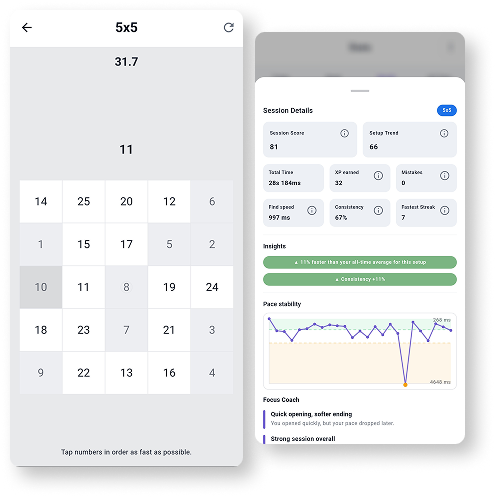
Quartenson: Schulte Tables
Available nowTrain Schulte tables on Android with session history, pace patterns, heatmaps, achievements, and weekly progress review.
Explore Schulte Tables