
What Is a Schulte Table? Try a Free 5×5 Trainer
Last updated 8 minutes to read
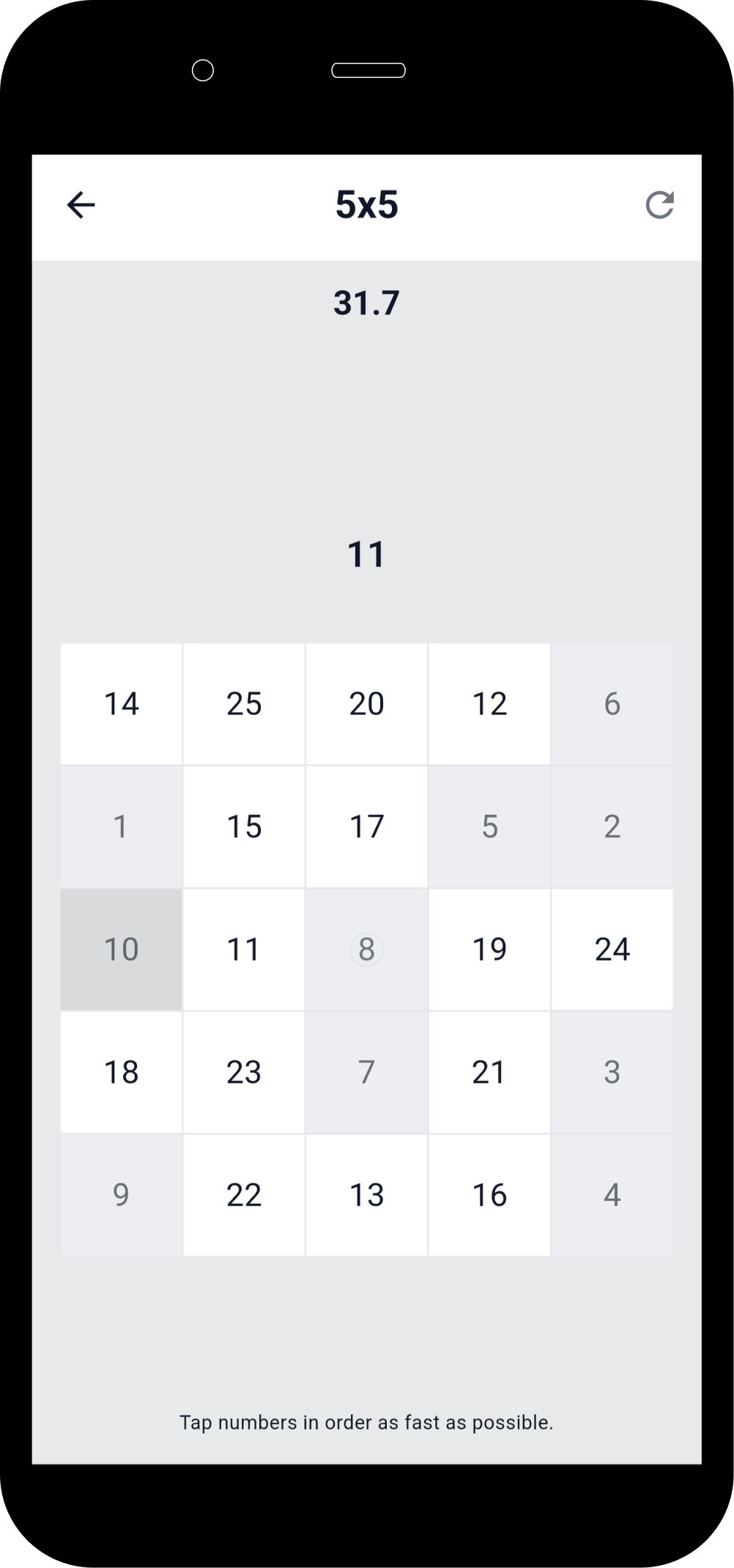
Quick answer: what is a Schulte table?
A Schulte table is a grid of randomly arranged numbers. The task is to find them in order, usually starting at 1.
The classic version is a 5×5 grid with numbers from 1 to 25. For beginners, the useful goal is not only speed; a clean round with few or no mistakes tells you more.
Classic format
5×5 grid
Main task
Find numbers in order
Beginner rule
Accuracy first, speed second
What Is a Schulte Table?
A Schulte table is a numbered grid where the positions are randomized. In the classic 5x5 version, the grid contains numbers from 1 to 25.
The task is simple: find 1, then 2, then 3, and continue until the final number. Because the numbers are scattered, you cannot rely on normal left-to-right reading. You have to search across the whole grid while keeping attention steady.
The useful part of the exercise is not only finishing quickly. A good round also depends on accuracy, rhythm, and whether you stay controlled from the first number to the last.
How to Use a Schulte Table
A basic Schulte table round works like this:
- Choose a grid size.
- Start the timer.
- Find the numbers in order.
- Avoid guessing or random clicking.
- Check your result and accuracy after the round.
Beginners should start with control, not speed. If you rush and lose accuracy, the result becomes less useful.
One clean round is better than several rushed rounds.
Simple Beginner Routine
First session: try 3x3 or 4x4.
Next sessions: move to 5x5 when accuracy feels stable.
Practice length: 1-3 focused rounds.
Main goal: cleaner rounds before faster ones.
For a deeper routine, read how to use Schulte tables correctly.
What Schulte Tables Train, and What They Don't
Schulte tables are commonly used to practice visual scanning and attention control. They encourage you to search across a wider area instead of following a predictable reading line.
They may help you practice:
- visual scanning
- attention control
- search rhythm
- accuracy under time pressure
- awareness of hesitation and mistakes
But Schulte tables are not magic. They are not a medical test, and they do not automatically improve reading speed or comprehension by themselves.
They work best as a short practice exercise combined with good technique and consistent review.
Read the peripheral vision training guide or whether Schulte tables help with speed reading for related context.
Which Schulte Table Size Should You Use?
| Grid size | Best for | Notes |
|---|---|---|
| 3x3 | First try | Very short and beginner-friendly |
| 4x4 | Beginner practice | Good for learning the exercise |
| 5x5 | Classic practice | Most common Schulte table format |
| 6x6 | Challenge rounds | Harder search area, more fatigue |
| 7x7 | Advanced practice | Use only after you can stay accurate |
A larger grid is not automatically better. If a bigger grid makes you tense, inaccurate, or frustrated, go smaller and rebuild control.
How to Understand Your Schulte Table Result
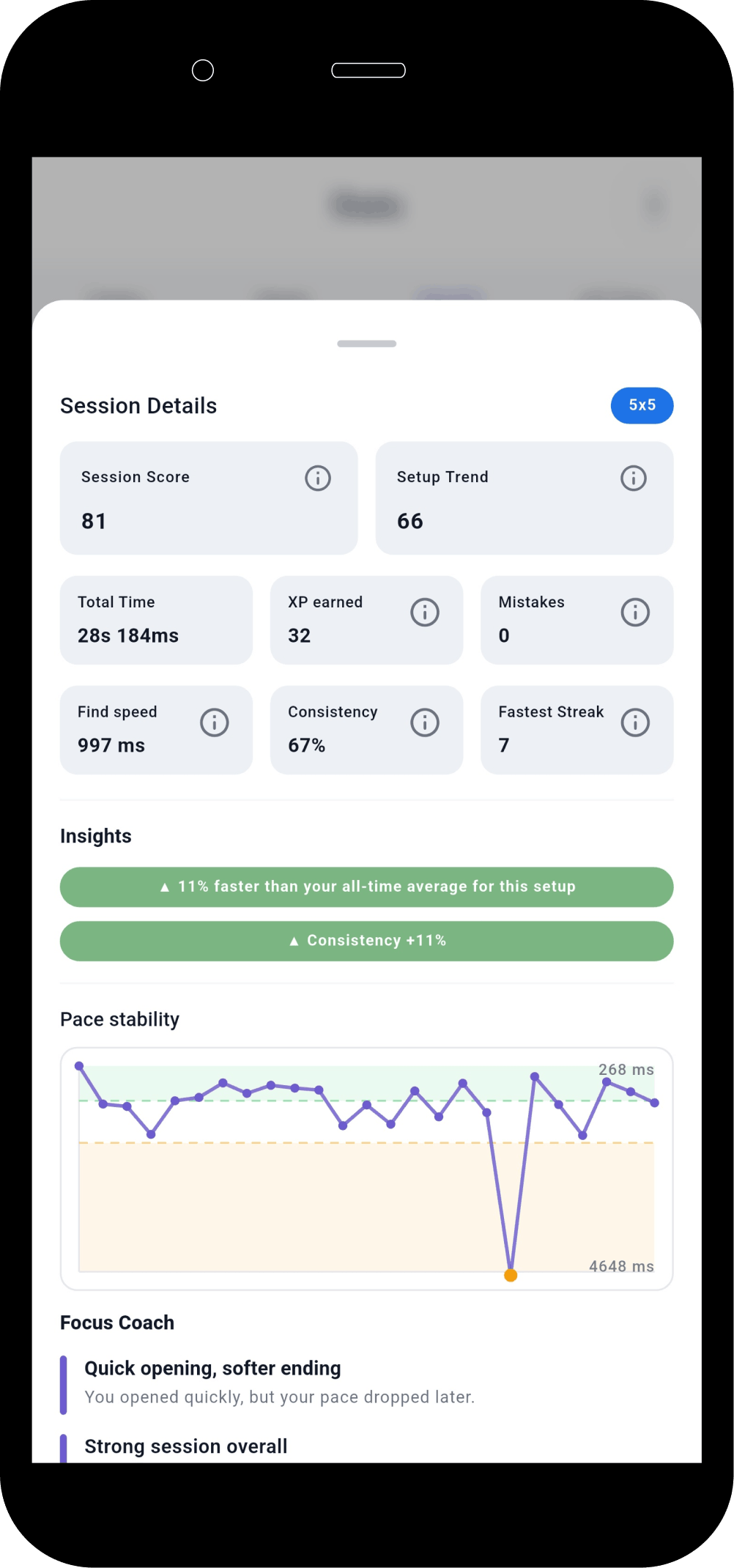
A Schulte table result should not be judged by time alone. Completion time is useful, but mistakes and consistency matter too.
A fast result is not automatically a good result. A better result is accurate, controlled, and repeatable.
A useful result answers three questions:
- How long did the round take?
- How many mistakes did you make?
- Was the result stable compared with your usual sessions?
A single fast round may be luck. A better sign of progress is when your usual pace improves while accuracy stays stable.
| Metric | What it tells you | What to do |
|---|---|---|
| Time | Your completion speed for the grid | Improve gradually, not by rushing |
| Mistakes | Whether speed is hurting accuracy | Slow down when accuracy drops |
| Consistency | Whether your results are stable | Compare several clean rounds |
| Fatigue | Whether performance drops over time | Keep sessions short |
Want to compare your result? Read the Schulte table average time guide.
Common Schulte Table Mistakes Beginners Make
The exercise is simple, but the way you practice matters. These are the most common mistakes:
Chasing speed too early
Speed is useful only when accuracy stays controlled.
Treating one round as proof
One result can be random. Patterns across sessions are more useful.
Practicing too long
Short, focused rounds usually work better than tired repetition.
Ignoring mistakes
A faster round with weaker accuracy is not always progress.
Moving the eyes too aggressively
A calmer central gaze is often better than chasing every number sharply.
Try one clean round with the free Schulte table trainer.
Ready to train more systematically? Read how to improve your Schulte table time with a clean baseline and short practice plan.
Start a Practice RoundTry a Free Schulte Table Online
The easiest way to understand a Schulte table is to try one. The free Quartenson trainer runs in your browser and lets you choose a grid size, complete a round, and check your result.
Use it for quick practice, warm-ups, or as a simple focus reset.
Free Online Schulte Table Trainer
Choose a grid size, find the numbers in order, and see whether the round was fast, clean, and controlled.
Practice OnlineWhen to Use the App
The free web trainer is best for quick practice. It gives you the basic round: choose a grid, finish the table, and review the result.
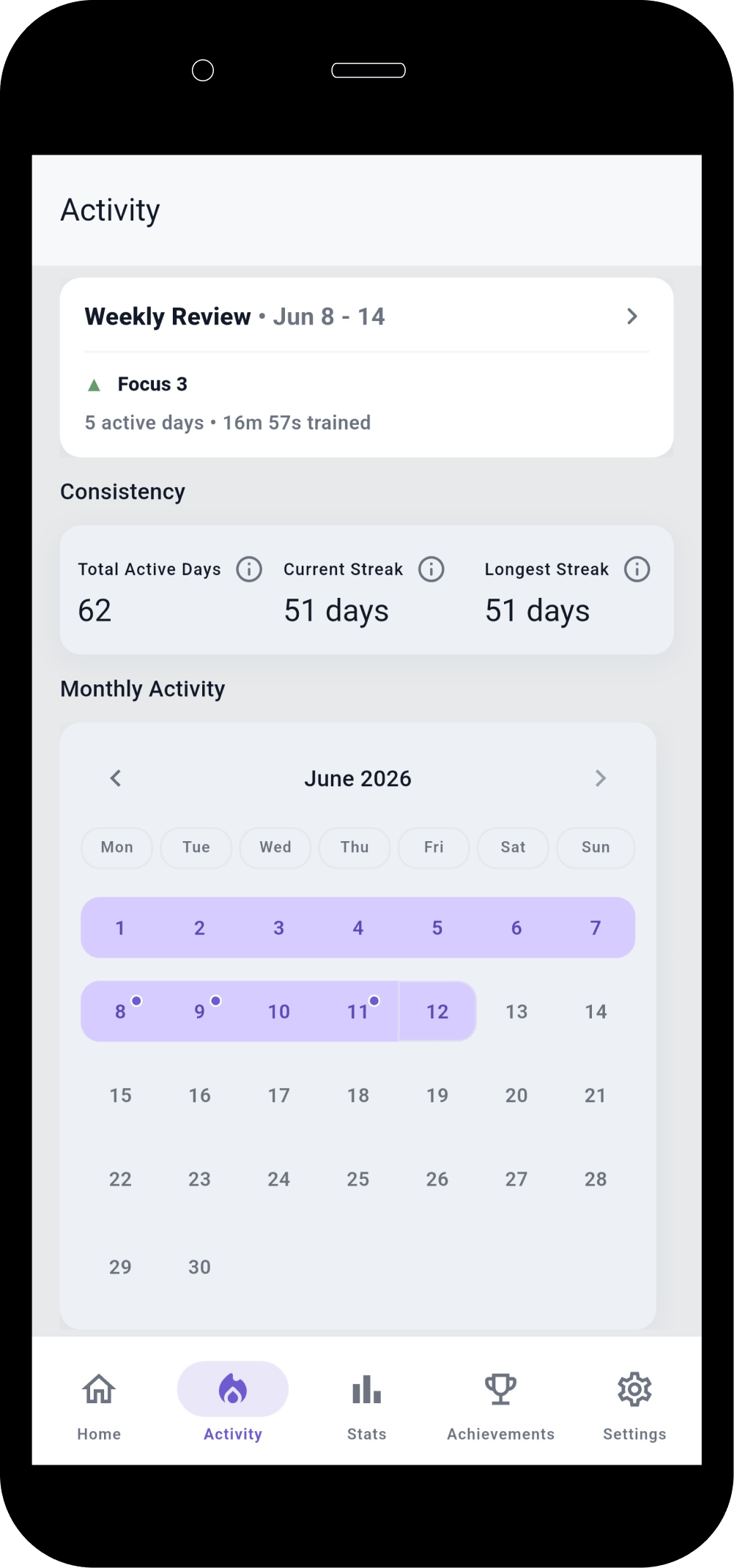
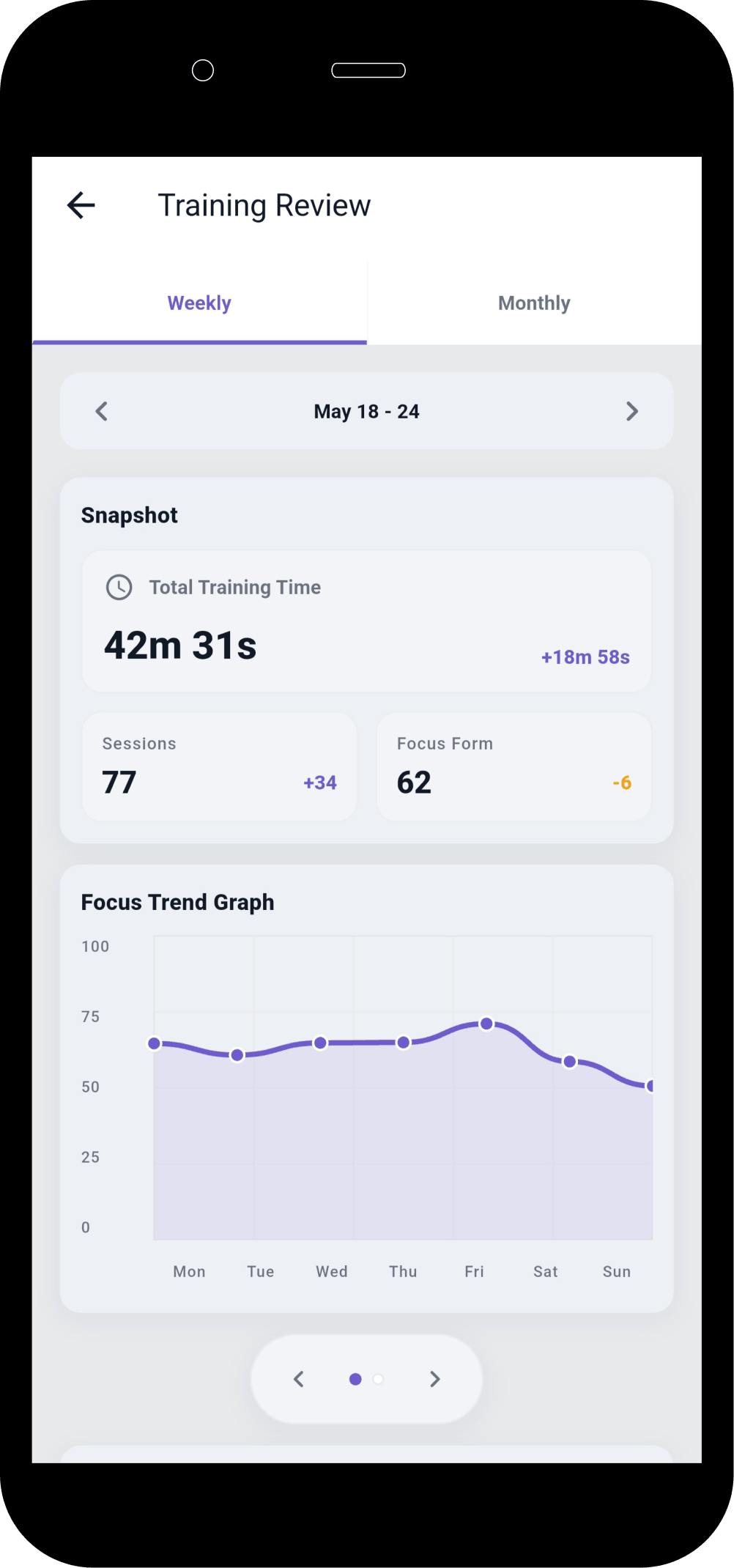
Quartenson: Schulte Tables is for deeper training. The app adds progress history, activity review, session details, heatmaps, pace patterns, achievements, and weekly or monthly summaries.
Use the web trainer when you want a quick round. Use the app when you want to understand how your performance changes over time.
| Feature | Free web trainer | Quartenson: Schulte Tables app |
|---|---|---|
| Play Schulte tables | Yes | Yes |
| Basic result | Yes | Yes |
| Session history | No | Yes |
| Heatmaps | No | Yes |
| Pace/rhythm review | No | Yes |
| Weekly/monthly progress | No | Yes |
| Achievements | No | Yes |
Go deeper with Quartenson: Schulte Tables
Review sessions, trends, and consistency over time.
Explore Schulte TablesSchulte Table FAQ
Short answers for common beginner questions about Schulte table practice.
What is a Schulte table used for?
A Schulte table is used as a visual scanning and attention exercise. The common task is to find numbers in order while staying accurate and steady.
What is the classic Schulte table size?
The classic format is usually a 5x5 grid with numbers from 1 to 25.
Are Schulte tables good for beginners?
Yes, but beginners should start slowly. Smaller grids such as 3x3 or 4x4 are useful for learning the exercise before moving to 5x5.
Should I focus on speed or accuracy?
Start with accuracy. Speed becomes useful only when you can complete rounds with low mistakes and steady attention.
Can Schulte tables improve reading speed?
Schulte tables can support visual scanning and attention practice, which may be useful alongside reading exercises. They do not automatically improve reading speed or comprehension by themselves.
How often should I practice Schulte tables?
Short sessions are usually enough. A few focused rounds several times per week are better than long sessions where attention becomes tired.
What is a good Schulte table time?
A good time depends on grid size, accuracy, and your experience level. Do not judge progress from one round. Compare several clean rounds over time.
Ready to Practice?
Start with one clean round in the free browser trainer, then move into Quartenson: Schulte Tables when you want history, heatmaps, and weekly review.
Continue learning
More Quartenson guides connected to this topic.
How to Use Schulte Tables Correctly
Learn the correct Schulte table routine for beginners: choose a grid size, practise clean 5×5 rounds, avoid rushing, and track time with accuracy.
Schulte Table Average Time
Compare 1,000+ Quartenson 5×5 results by Classic and Dynamic mode. See median, 25th and 75th percentiles, and compare your own time fairly.
How to Improve Schulte Table Time
Use practical drills to reduce pauses, avoid rushing, compare clean 5×5 results, and improve your Schulte table time with a structured 14-day plan.
Track Schulte Table Progress
Learn how to track Schulte table progress with clean median time, mistakes, consistency spread, personal bests, and recent history instead of relying only on one fastest result.
Try a free tool
Practice the same ideas with a browser-based exercise.
Free Schulte Table Trainer
Find the numbers in order
Focus • Scanning • Speed
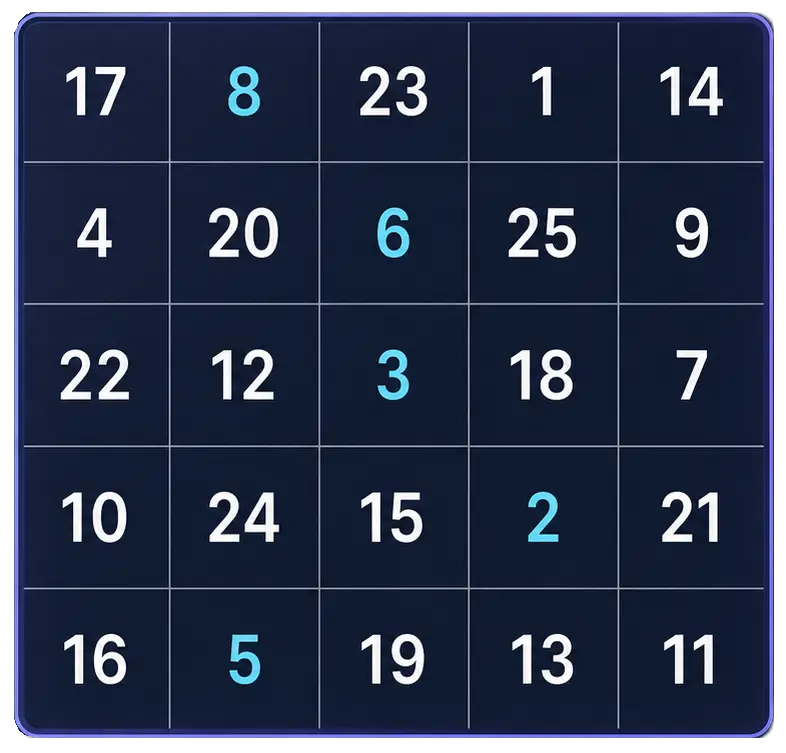
Free Schulte Table Trainer
Browser toolGoal: Cleaner 5x5 rounds with fewer mistakes
Practice Schulte tables online with a simple browser grid. Choose 3x3 through 7x7, track time and mistakes, and use pause, shuffle, and keyboard controls for quick focus sessions.
Start Free TrainerVisual Search Test
Find the target among distractors
Speed • Accuracy • Focus
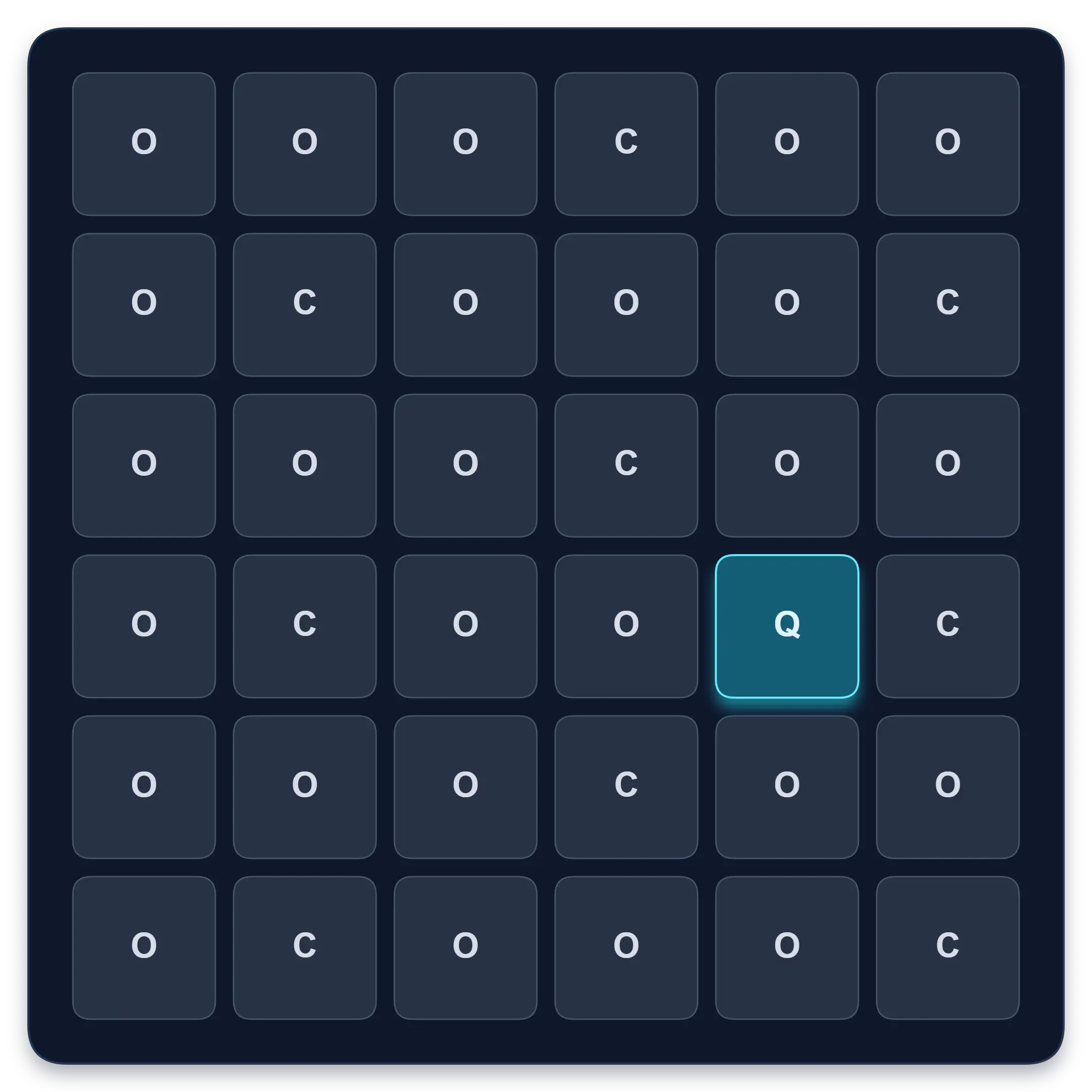
Visual Search Test
Browser toolGoal: Faster target spotting with better accuracy
Find one target among similar symbols, letters, or numbers. Complete ten short rounds and track median response time, accuracy, and clean results.
Start Visual Search TestContinue in the app
Use the app when you want structured sessions and longer-term tracking.
Schulte table training with progress
History, heatmaps, pace, and weekly review
History • Heatmaps • Progress
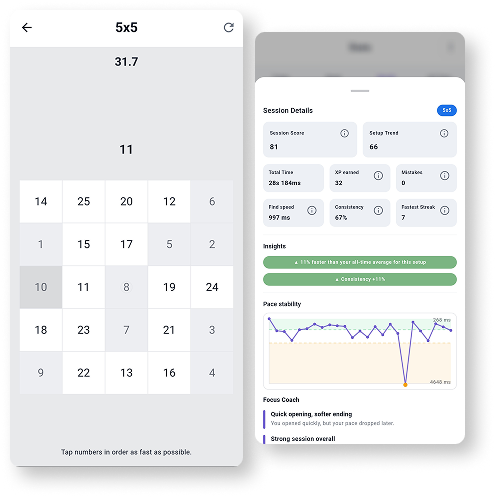
Quartenson: Schulte Tables
Available nowTrain Schulte tables on Android with session history, pace patterns, heatmaps, achievements, and weekly progress review.
Explore Schulte Tables