
Peripheral Awareness Exercises Without a Screen: A Printable Guide
Last updated 7 minutes to read
You do not need a screen to try a simple peripheral-awareness activity. A sheet of paper, a large target and a partner are enough to practise noticing a location away from the point you are looking toward.
This guide gives you two seated activities: first report the target's location, then add a second answer about the centre. You can print the board and record sheet below, or draw your own. The aim is to learn and check the task, not to push targets farther out or chase a score.
These are informal practice suggestions, not vision therapy, a validated training programme or a way to measure your visual field. For the wider explanation, see our peripheral vision training guide.
Set up a paper task you can check
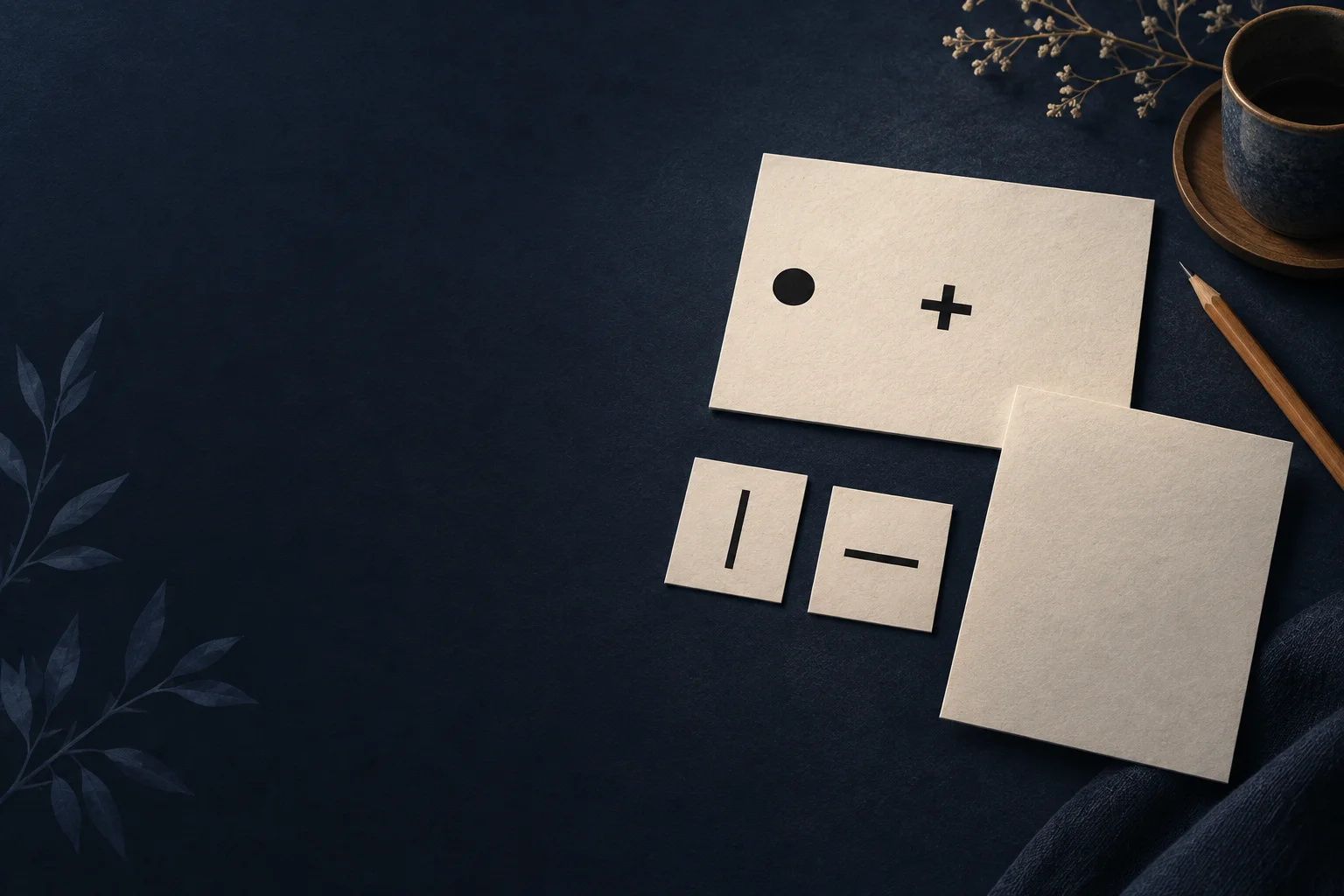
Use plain paper or card, a dark marker, a pencil, a blank covering sheet and a partner. Draw a large filled circle on a small paper card. Make two more cards with one thick line each: one horizontal, one vertical. Keep the line cards the same size so their edges do not give away the answer.
- Print the board below or draw a centre cross with four empty areas around it. Use ordinary A4 or Letter paper. There is no calibrated print size.
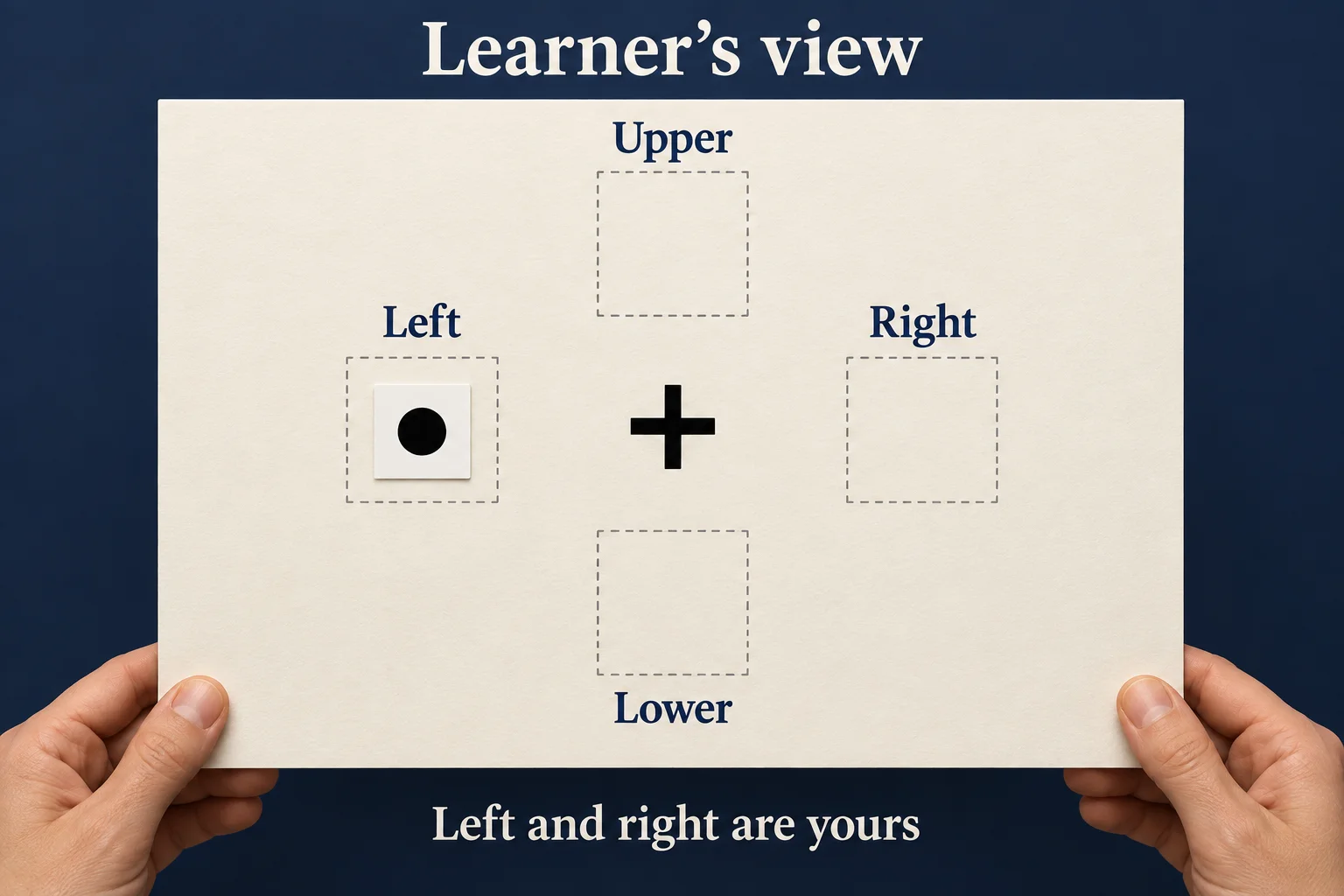
- Agree that left and right always mean the learner's left and right . Point to each area together before beginning.
- Sit comfortably. Have the partner hold or support the board steadily in front of you, with the whole page visible and their fingers away from the centre and target areas.
- Look directly at each sample card once to check that the mark is clear. Then return your gaze toward the centre cross. Use your usual comfortable viewing correction; do not cover an eye.
Keep the page at a comfortable distance. Do not lean, squint, stretch your eyes toward the edges or suppress blinking. If the setup is awkward, change it or stop. Do this seated, not while walking, driving or balancing.
On your own? Rehearse where to look and what to say. That is a useful introduction, but placing your own target tells you its location in advance. Do not record it as an unseen-target attempt.
Activity 1: notice where the target appears
Begin with just one answer. Leave the centre cross visible and use the circle card as the target.
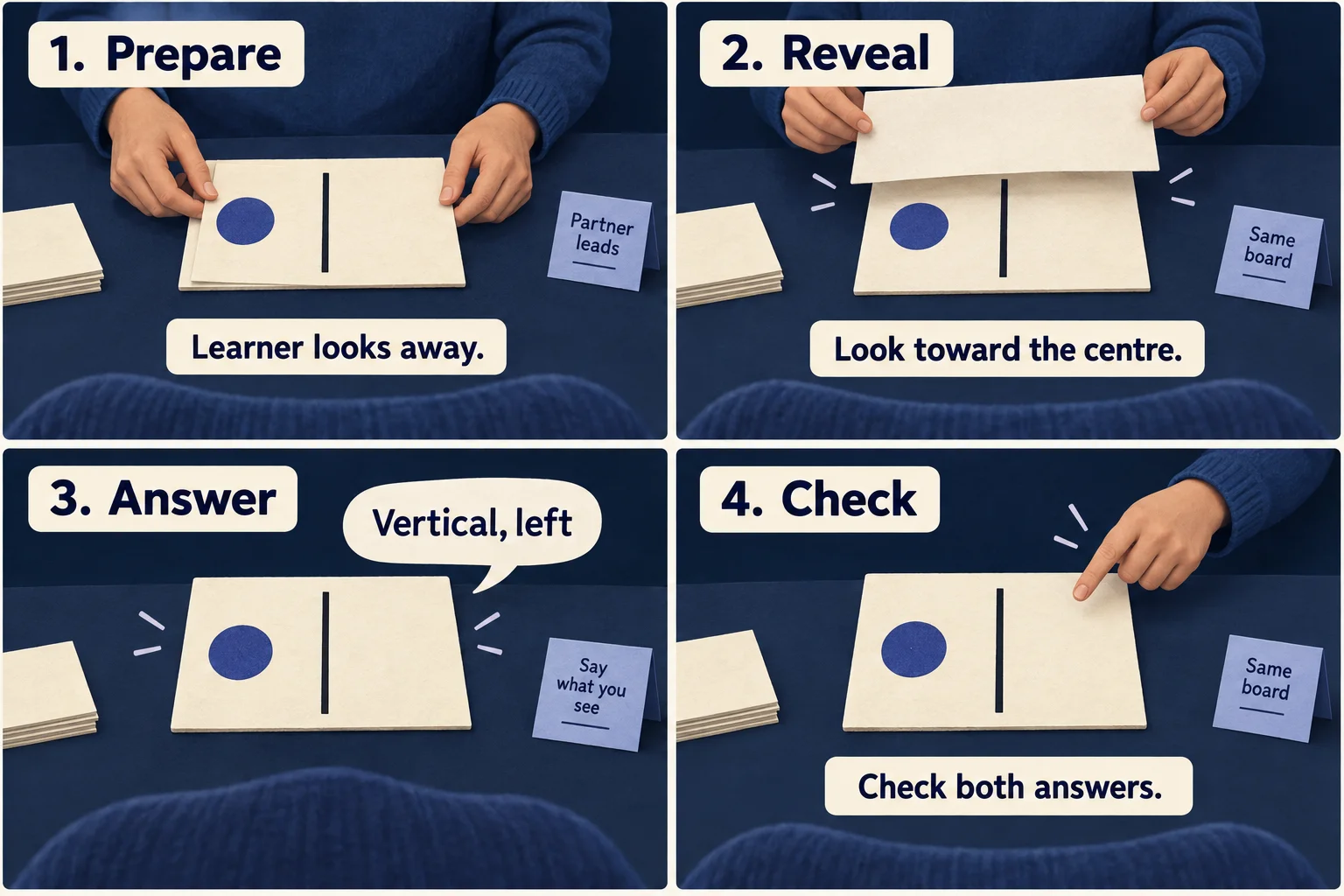
- Look away while your partner puts the circle in one of the four areas and covers the board. They should vary the location rather than follow a predictable order.
- Turn back toward the middle of the covered page. When you are ready, your partner removes the cover and holds the board still. Look toward the centre cross.
- Say upper, lower, left or right . Say unsure if you did not notice the location. Leave the board visible until you answer; this is not a speed test.
- Now look directly at the target and check your answer together. Cover the board again before preparing the next round.
If you looked straight at the circle before answering, note it and move on. Do not count that round as equivalent to one where you aimed to look at the centre. Neither you nor your partner can reliably verify every eye movement.
The partner's hands, sounds and the way the cover moves can also give hints. Keep the presentation as similar as practical, but do not mistake this home activity for a controlled experiment. Try a few comfortable rounds; completing every row is not a goal.
Activity 2: report the centre and the location
When the location task and answer order are clear, try adding the line card at the centre. This changes the activity, so begin a new record rather than compare its totals with Activity 1.
- While you look away, your partner places either line card over the centre cross and the circle in one of the four areas, then covers the board. They vary the line and location independently.
- Repeat the reveal. Look toward the centre and give both answers: the line first, then the location. For example, “vertical, left.”
- Keep the board visible until both answers are given. If uncertain, say which part was unclear instead of guessing repeatedly.
- Check the cards together. Record the centre answer and location answer separately. Mark “both correct” only when both were correct in that round.
Worked check: the board shows a vertical line and a circle on your left. You answer “horizontal, left.” The location is correct, the centre is incorrect, and the round is not fully correct. If the opposite happens on the next round, that does not turn either round into a fully correct one.
Do not make the reveal a rapid flash. Hand timing varies, and shortening it introduces another change. The browser trainer offers brief programmed displays, but this paper version deliberately keeps the presentation untimed.
Printable peripheral-awareness practice sheet
Informal paper practice, not an eye test. Left and right are from the learner's view. Use a circle card as the target. For Activity 2, cover the centre cross with a horizontal or vertical line card.
Partner: prepare out of view, cover, reveal steadily, wait for the answer, then check. Learner: look toward the centre; answer the location, or line then location. Mark unsure, hints or looking directly at the target. Stop if uncomfortable.
Date: __________ Activity: 1 / 2 Page size/distance or other setup notes: ____________________
| Round | Centre* | Location | Both* | Notes / unsure / looked at target |
|---|---|---|---|---|
| 1 | ||||
| 2 | ||||
| 3 | ||||
| 4 | ||||
| 5 | ||||
| 6 |
*Activity 2 only. Use a tick for correct, a cross for incorrect and ? for unsure. Six rows are for convenience, not a training prescription. A correct answer does not prove steady gaze or healthy vision. No pass mark or clinical interpretation.
Quartenson · quartenson.com/blog/peripheral-awareness-exercises-without-screen
Use the record to choose a sensible adjustment
A useful note is specific: “I reversed left and right,” “the partner covered part of the page,” or “I looked at the target before answering.” Those notes tell you what to clarify. A single total does not.
- Confused by the labels? Point to the areas together and practise the response order without scoring.
- Location right, centre wrong? Check the line cards directly, then try the two-answer order slowly. The record does not tell you why the error happened.
- Too many unsure answers? Check lighting, clear marks and the whole-page view. You can try larger cards or bring the target closer to the centre, but label it as a new setup.
- Everything feels predictable? Ask your partner to change the order. Do not spread the targets farther outward just to make the activity difficult.
- Discomfort or fatigue? Stop. There is no requirement to finish or practise every day.
If you revisit it another day, use the same activity, page, target cards, viewing arrangement and presentation rule. A familiar order, an easier setup or a helpful cue can change the answers. These small records describe the activity; they are not evidence that your visual field has widened.
Paper activity or browser exercise?
Paper works when you want a screen-free, untimed activity with someone else. The free Peripheral Awareness Trainer is an option when you want generated target locations, brief displays and automatic central/location result checks without a partner.
They are different tasks. Do not compare a paper tally with a browser percentage as though they share the same difficulty. For repeat browser sessions, keep the same settings and device and use local History. The progress-comparison guide explains how to avoid treating one best attempt as a trend.
Keep practice separate from eye care
A clinical visual field test checks side vision as part of professional assessment. This paper board does not perform that examination, locate blind spots or establish that your vision is normal. See the National Eye Institute's explanation of an eye examination.
Do not use these activities to investigate new vision symptoms or replace prescribed care. A sudden shadow or curtain, flashes, or a sudden increase in floaters warrants immediate eye care or emergency care, as described by the National Eye Institute.
Questions about screen-free practice
Practical answers about the partner activities and printable sheet.
Can I practise peripheral awareness without an app?
Yes. These paper activities give you a centre marker and an off-centre target to notice. A partner can vary the target so you do not know its location in advance. This is an informal activity, not an eye examination or a validated training programme.
Can I do the exercises alone?
You can prepare the board and rehearse the answer order alone. If you place the target yourself, you already know the answer, so do not count that as an unseen-target result. Use a partner or the browser trainer for a location you have not chosen yourself.
Is there a printable peripheral-awareness chart?
The printable sheet in this guide is a blank activity board with instructions and a record table. Use your browser's Print or Save as PDF option. It is not a clinical chart, and its physical size or a successful answer does not measure your visual field.
How many rounds should I do?
Try a few comfortable rounds to learn the task. The sheet has six rows for convenience, not because six rounds is a recommended training dose. Stop when you want to, and stop if the activity causes discomfort. There is no required daily schedule.
Does getting more answers right mean my eyesight improved?
No. A result can change because you learned the response order, remembered a pattern, received a hint or changed the setup. This activity does not establish wider peripheral vision, improved eyesight or better performance outside the task.
Continue learning
More Quartenson guides connected to this topic.
Peripheral Vision Training
Try a peripheral-awareness exercise, compare central and side-target accuracy, and learn why browser practice is not a clinical visual field test.
Benchmark Cognitive Training Progress
Learn how to benchmark cognitive training progress with time, accuracy, mistakes, consistency, streaks, and Quartenson community and this-device comparisons.
Peripheral Practice on Phone vs Desktop
Practise peripheral awareness on a phone or desktop with a repeatable setup checklist. Understand screen size, viewing distance and when to separate results.
Peripheral Awareness vs Visual Scanning
Compare peripheral awareness, visual search and sequential scanning through worked examples. Choose an exercise by its task, not just its score.
Try a free tool
Practice the same ideas with a browser-based exercise.
Peripheral Awareness Trainer
Notice brief off-centre targets
Awareness • Accuracy • Focus

Peripheral Awareness Trainer
Browser toolGoal: Off-center awareness while holding focus
Keep attention near the centre while noticing brief off-centre targets. Complete a dual task and review central, peripheral, and combined accuracy.
Start Awareness ExerciseVisual Search Test
Find the target among distractors
Speed • Accuracy • Focus
Visual Search Test
Browser toolGoal: Faster target spotting with better accuracy
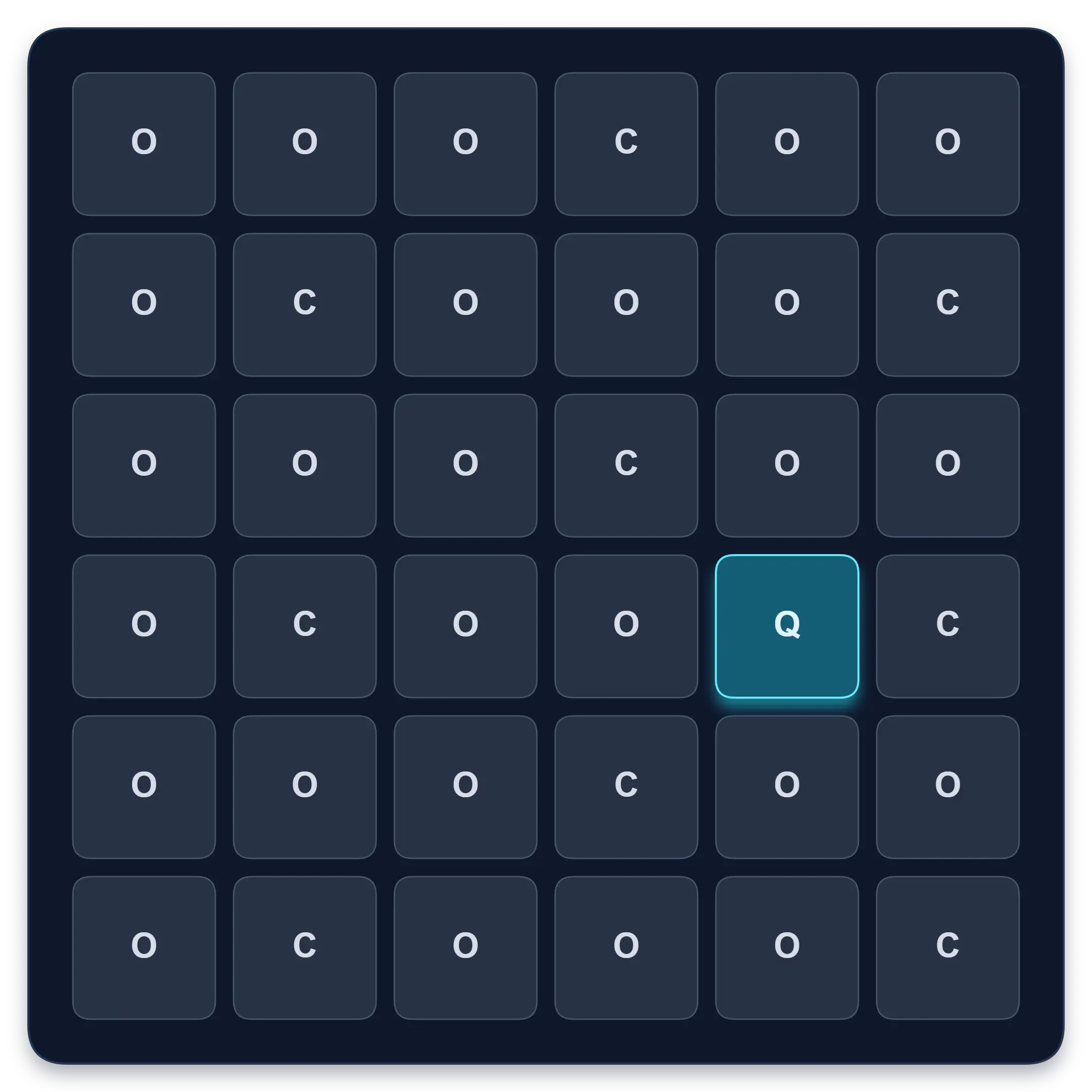
Find one target among similar symbols, letters, or numbers. Complete ten short rounds and track median response time, accuracy, and clean results.
Start Visual Search Test