
A short browser practice session
For people who want to practise holding and reversing a small sequence. Start with three digits if the task is unfamiliar; a larger starting span adds more material to remember.
Watch digits appear one at a time, then recall them backwards. Practise eight rounds with a fixed length by default and review your accuracy and longest correct span.
Backward digit span is a short sequence-recall task. Watch each digit, keep the order in mind, then type the sequence backwards after presentation ends. Reversing the order makes it different from simply repeating digits forwards.
This is practice on a specific task, not a medical assessment or IQ test. Results depend on settings, device, input method and familiarity. Compare like-for-like sessions; a higher score does not establish general cognitive improvement.
Choose the task that fits what you want to practise.
For people who want to practise holding and reversing a small sequence. Start with three digits if the task is unfamiliar; a larger starting span adds more material to remember.
Compare sessions with the same settings, language and input method. Review accuracy and unanswered trials before response time. These are task results, not population norms or a measure of intelligence.
The latest 10 local sessions are kept on this device. Signed-in sessions are saved to your account; guest sessions can be imported after review. No digits, positions, words or answers are uploaded.
Accuracy counts every scored trial, including unanswered trials. Response time is the median of answered trials and is shown alongside accuracy, never as a substitute for it.
This is practice on a specific task, not a medical assessment or IQ test. Results depend on settings, device, input method and familiarity. Compare like-for-like sessions; a higher score does not establish general cognitive improvement.
The latest 10 local sessions are kept on this device. Signed-in sessions are saved to your account; guest sessions can be imported after review. No digits, positions, words or answers are uploaded.
Use the metrics together. Faster answers with more mistakes do not necessarily represent better task performance.
| Metric | What it means |
|---|---|
| Correct | Correct answers out of all scored trials. Wrong and unanswered trials remain in the total. |
| Median response | The middle response time among answered trials, including wrong answers. Unanswered trials are excluded. |
| Longest correct span | The longest sequence recalled completely correctly. It is not an average span or a standardized test score. |
Start with 3, 4 or 5 digits. Fixed mode keeps the selected length for all eight rounds. Optional Flexible mode adds one digit after a correct answer and removes one after a wrong or skipped answer, within 2-9 digits. The presentation uses 900 ms per digit and a 200 ms blank gap. There are 30 seconds to enter a complete answer.
Preserve leading zeros, wait until the full sequence has ended, and enter every digit before checking. Use Skip if you cannot recall it; guessing and skipping are recorded differently.
Compare sessions with the same settings, language and input method. Review accuracy and unanswered trials before response time. These are task results, not population norms or a measure of intelligence.
Pause or open the guide when you need a break. Resume the same trial when ready; paused time is excluded.
Practical answers about the task, settings and saved results.
Fixed mode keeps the selected length for all eight rounds. Optional Flexible mode adds one digit after a correct answer and removes one after a wrong or skipped answer, within 2-9 digits.
The latest 10 local sessions are kept on this device. Signed-in sessions are saved to your account; guest sessions can be imported after review. No digits, positions, words or answers are uploaded.
Compare sessions with the same settings, language and input method. Review accuracy and unanswered trials before response time. These are task results, not population norms or a measure of intelligence.
N-back
Match positions from N steps earlier.
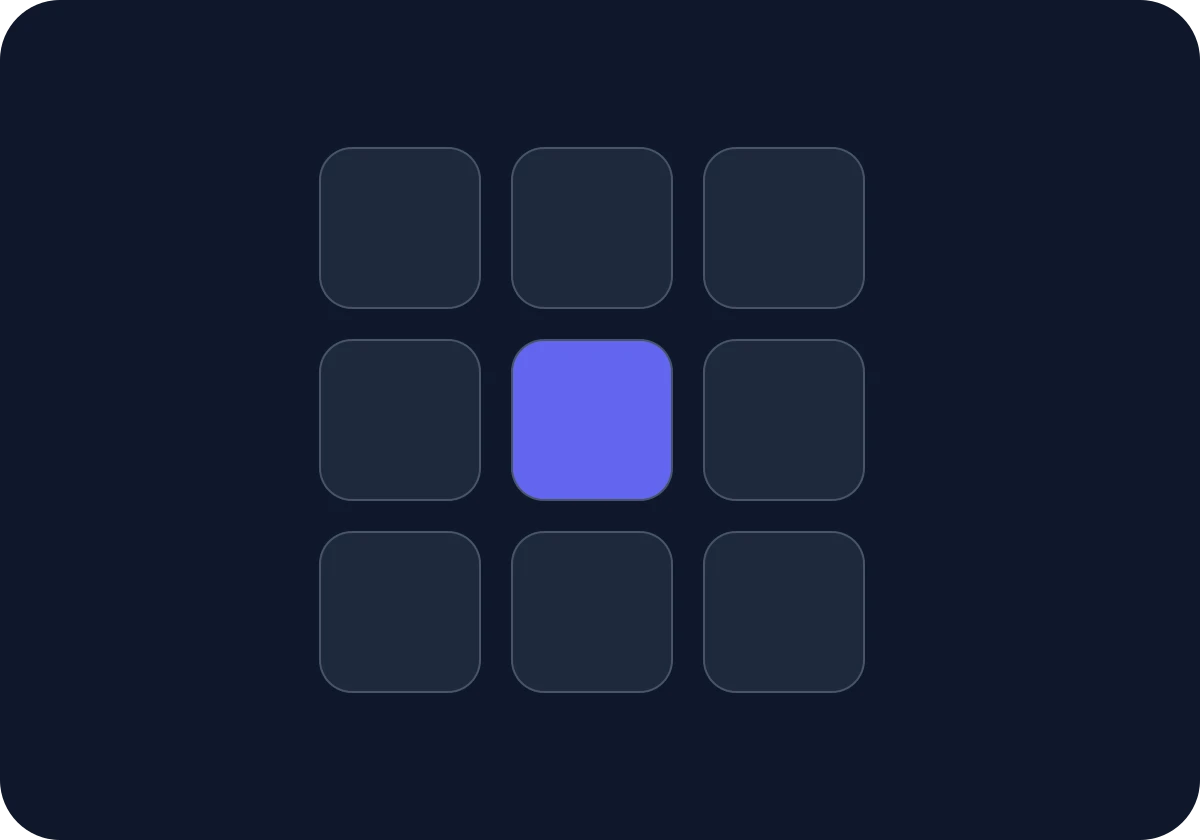
Goal: N-back
Follow positions on a nine-cell grid and decide whether each matches the position N steps earlier. Try visual 1-, 2- or 3-back with twenty scored trials.
Start: N-backStroop-style Color Challenge
Match color words to their ink color.
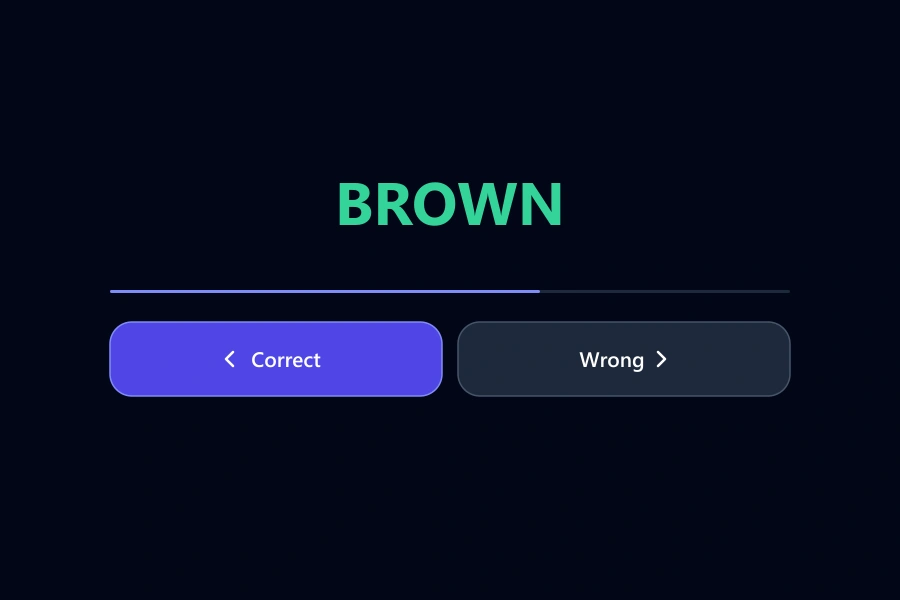
Goal: Stroop-style Color Challenge
Decide whether a color word matches its ink color. Choose 10, 20 or 30 rounds, or practise for 30, 60 or 90 seconds, and review accuracy and response time.
Start: Stroop-style Color ChallengeFree Schulte Table Trainer
Find the numbers in order
Focus • Scanning • Speed
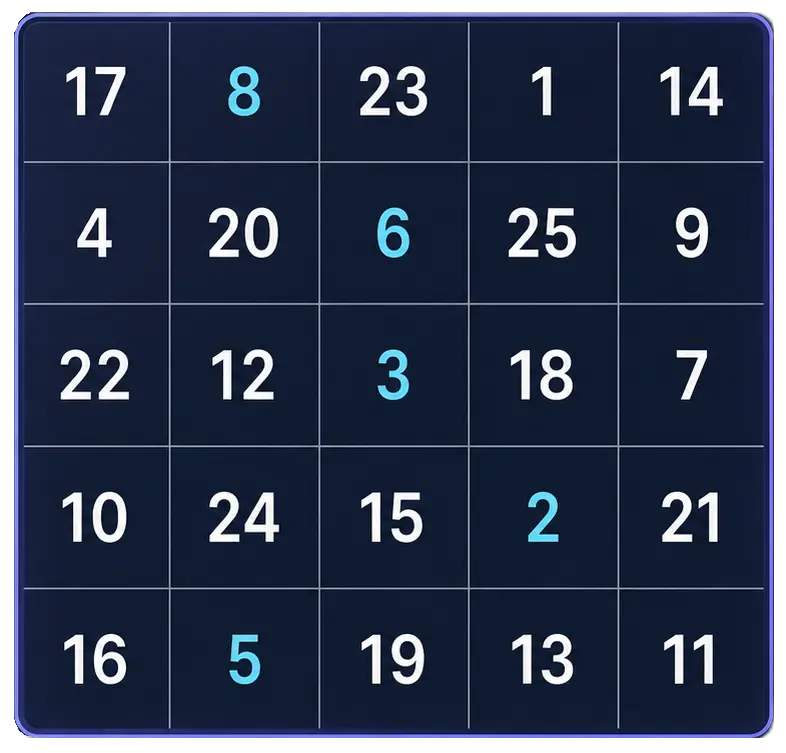
Goal: Cleaner 5x5 rounds with fewer mistakes
Practice Schulte tables online with a simple browser grid. Choose 3x3 through 7x7, track time and mistakes, and use pause, shuffle, and keyboard controls for quick focus sessions.
Start Free TrainerLearn the backward digit span rule with a reverse-order example, try eight rounds with fixed or flexible length, and understand longest span and accuracy.
Learn how pattern and sequence memory differ, try evidence-informed visual memory exercises, and follow a practical 14-day plan with repeatable progress tracking.
Learn how to benchmark cognitive training progress with time, accuracy, mistakes, consistency, streaks, and Quartenson community and this-device comparisons.
Schulte table training with progress
History, heatmaps, pace, and weekly review
History • Heatmaps • Progress
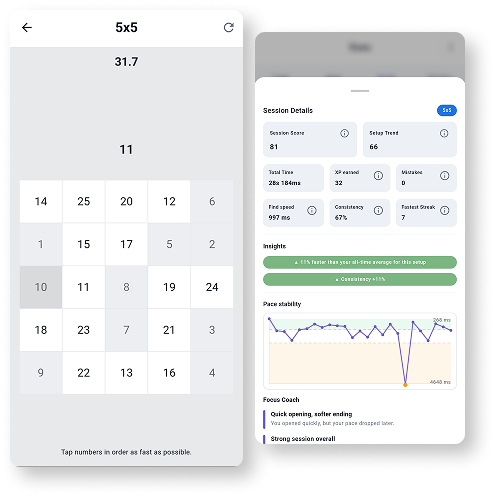
Train Schulte tables on Android with session history, pace patterns, heatmaps, achievements, and weekly progress review.
Explore Schulte Tables